The Big 5: Why Compound Movements Should Form 80% of Your Training
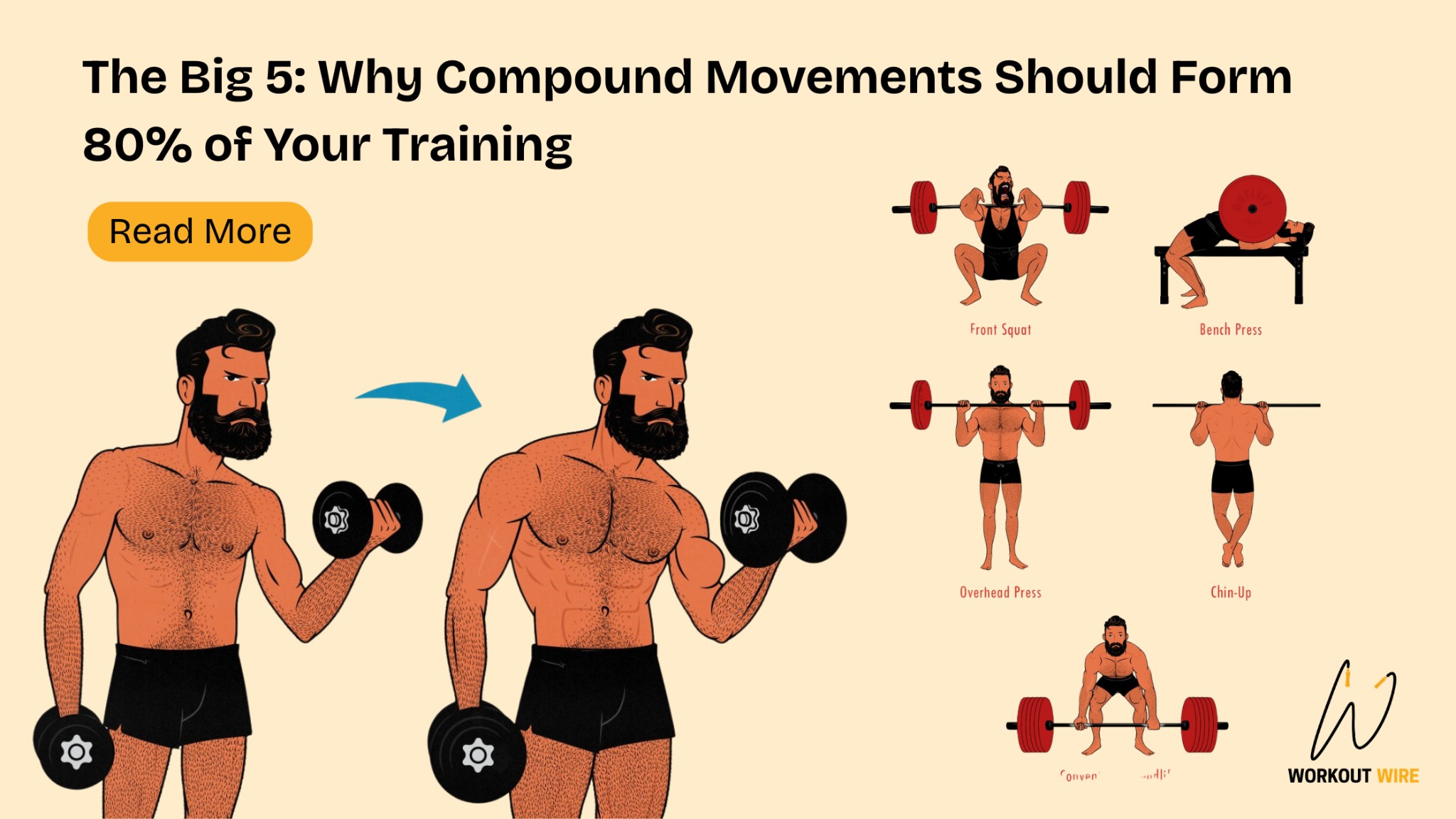
Walk into any gym and you'll see people doing bicep curls, leg extensions, and cable flies. There's nothing inherently wrong with isolation exercises, but if they form the foundation of your program, you're building your fitness house on sand.
The real foundation? Compound movements. These multi-joint exercises are the reason why strength athletes, bodybuilders, and functional fitness enthusiasts all achieve remarkable results despite having different goals. Let's explore why these movements are non-negotiable.
What Makes a Movement "Compound"?
A compound exercise involves multiple joints and muscle groups working simultaneously to move weight through space. Unlike isolation exercises that target a single muscle (like a bicep curl), compound movements require coordination, stability, and force production from numerous muscles.
This makes them more metabolically demanding, more functional, and significantly more efficient for building overall strength and muscle mass.
The Big 5 Movements Every Program Needs
1. The Squat: King of Lower Body Movements
Primary muscles: Quadriceps, glutes, hamstrings, adductors, core, erector spinae
Why it matters: The squat is the most fundamental human movement pattern. It builds lower body strength, improves mobility, and creates a powerful foundation for athletic performance.
Variations by goal:
- Strength: Back squat (low bar), 3–5 reps
- Hypertrophy: Front squat or high-bar back squat, 6–12 reps
- Athletic performance: Jump squats, 3–5 reps
- Beginners: Goblet squat, 8–12 reps
Technical cues:
- Feet shoulder-width apart, toes slightly out
- Brace your core before descending
- Push knees out as you descend
- Keep weight mid-foot, not on toes
- Drive through the floor on the way up
- Maintain neutral spine throughout
Common mistakes: Knees caving in, excessive forward lean, not reaching adequate depth, rising from the hips first instead of simultaneously.
2. The Deadlift: The Ultimate Posterior Chain Builder
Primary muscles: Hamstrings, glutes, erector spinae, lats, traps, core, grip
Why it matters: The deadlift teaches you to safely pick heavy things off the ground—one of the most practical movements you'll ever learn. It develops total-body strength and bulletproofs your back when done correctly.
Variations by goal:
- Strength: Conventional deadlift, 1–5 reps
- Hypertrophy: Romanian deadlift (RDL), 6–10 reps
- Athletic performance: Trap bar deadlift, 3–6 reps
- Beginners: Kettlebell deadlift, 8–12 reps
Technical cues:
- Stance: feet hip-width apart, shins nearly touching bar
- Grip the bar just outside your shins
- Set your back flat, chest up
- Push the floor away as you initiate the lift
- Keep the bar close to your body throughout
- Lock out at the top with glutes, not by hyperextending your back
Common mistakes: Rounding the lower back, bar drifting away from the body, not engaging lats, hyperextending at lockout, not hip-hinging properly.
3. The Bench Press: Upper Body Powerhouse
Primary muscles: Pectorals, anterior deltoids, triceps, serratus anterior
Why it matters: The bench press is the primary upper-body pressing movement and a phenomenal builder of chest, shoulder, and tricep strength. It also teaches body tension and force transfer.
Variations by goal:
- Strength: Flat barbell bench press, 3–5 reps
- Hypertrophy: Incline dumbbell press, 8–12 reps
- Athletic performance: Floor press, 5–8 reps
- Beginners: Push-ups, 8–15 reps
Technical cues:
- Retract and depress shoulder blades (pin them to the bench)
- Create a slight arch in your lower back
- Grip width just wider than shoulder-width
- Lower the bar to your mid-chest
- Tuck elbows at 45-degree angle, not flared at 90 degrees
- Drive feet into the floor as you press
Common mistakes: Elbows flaring out, losing shoulder blade position, bouncing bar off chest, feet not planted, uneven bar path.
4. The Overhead Press: The Shoulder Sculptor
Primary muscles: Deltoids (especially anterior and medial), triceps, upper chest, core, serratus anterior
Why it matters: Pressing weight overhead develops shoulder strength, stability, and resilience. It's also an incredible core exercise since you must prevent your back from hyperextending under load.
Variations by goal:
- Strength: Standing barbell overhead press, 3–5 reps
- Hypertrophy: Seated dumbbell shoulder press, 8–12 reps
- Athletic performance: Push press, 3–6 reps
- Beginners: Landmine press, 8–10 reps
Technical cues:
- Start with bar at clavicle level
- Grip slightly wider than shoulder-width
- Brace your core and glutes hard
- Press bar up and slightly back
- Move your head through once bar clears your forehead
- Lock out directly over your midfoot
- Control the descent
Common mistakes: Excessive back arch, not moving head through, pressing bar forward instead of up, not engaging core, hyperextending at lockout.
5. The Row: Balancing Push with Pull
Primary muscles: Lats, rhomboids, traps (middle and lower), rear deltoids, biceps, erector spinae
Why it matters: For every press, you need a pull. Rows build a strong, thick back, improve posture, and prevent the shoulder imbalances that lead to injury. They're essential for shoulder health.
Variations by goal:
- Strength: Barbell bent-over row, 5–8 reps
- Hypertrophy: Single-arm dumbbell row, 8–12 reps
- Athletic performance: Pendlay row, 5–8 reps
- Beginners: Inverted row, 8–12 reps
Technical cues:
- Hinge at hips, maintain neutral spine
- Pull to your lower sternum or upper abdomen
- Lead with your elbows, not your hands
- Squeeze shoulder blades together at the top
- Control the eccentric (lowering) phase
- Keep core braced throughout
Common mistakes: Using momentum to swing weight, not retracting shoulder blades, excessive lower back rounding, pulling too high (to chest), rushing the negative.
Why Compound Movements Build Muscle Faster
1. Greater Mechanical Tension
You can lift significantly more weight on compound movements. More weight means more tension on muscles, which is the primary driver of hypertrophy. A 225 lb squat stresses your entire lower body. Leg extensions with 80 lbs only stress your quads. The total muscle-building stimulus isn't even close.
2. Hormonal Response
Heavy compound movements trigger greater releases of anabolic hormones like testosterone and growth hormone. While the acute hormonal response isn't as critical as once thought, it still plays a supporting role in muscle growth.
3. More Muscle Worked
A bench press trains chest, shoulders, and triceps simultaneously. That's three muscle groups for the price of one exercise, making your training dramatically more efficient.
4. Improved Neural Efficiency
Compound movements teach your muscles to work together. This inter-muscular coordination means you get stronger not just because muscles grow, but because your nervous system gets better at recruiting muscle fibers.
Programming Compound Movements Effectively
The 80/20 Rule
Make compound movements 80% of your program's volume. Use isolation exercises for the remaining 20% to address weak points or add volume to specific muscles.
Sample Weekly Split
Day 1: Lower Body (Squat Focus)
- Back Squat: 4×6
- Romanian Deadlift: 3×8
- Bulgarian Split Squat: 3×10 per leg
- Leg Curl: 3×12 (isolation)
- Calf Raise: 3×15 (isolation)
Day 2: Upper Body (Press Focus)
- Bench Press: 4×6
- Overhead Press: 3×8
- Dumbbell Row: 4×10
- Tricep Dips: 3×8–12
- Lateral Raise: 3×12 (isolation)
Day 3: Rest or Active Recovery
Day 4: Lower Body (Deadlift Focus)
- Deadlift: 4×5
- Front Squat: 3×8
- Walking Lunges: 3×12 per leg
- Leg Extension: 3×12 (isolation)
- Core Work: 3 exercises
Day 5: Upper Body (Pull Focus)
- Barbell Row: 4×8
- Weighted Pull-ups: 4×6–8
- Incline Dumbbell Press: 3×10
- Face Pulls: 3×15
- Bicep Curls: 3×12 (isolation)
Days 6–7: Rest
Not sure how to structure these movements into a progressive plan? AI-powered workout generators can create compound movement-focused routines customized to your equipment, experience level, and schedule—eliminating the guesswork entirely.
The Bottom Line
Compound movements aren't just exercises—they're investments. Every rep you perform teaches your body to coordinate, stabilize, and produce force efficiently. The strength you build transfers to every physical activity you do.
Can you build muscle with isolation exercises alone? Sure. But you'll spend twice as long in the gym for half the results.
Master the Big 5. Make them the foundation of your training. Add isolation work as needed for specific goals or lagging body parts. This approach has worked for decades across every strength sport and fitness discipline.
Download Workout Wire on iOS (App Store) or Android (Google Play) and join compound movement challenges with hundreds of others building serious strength.